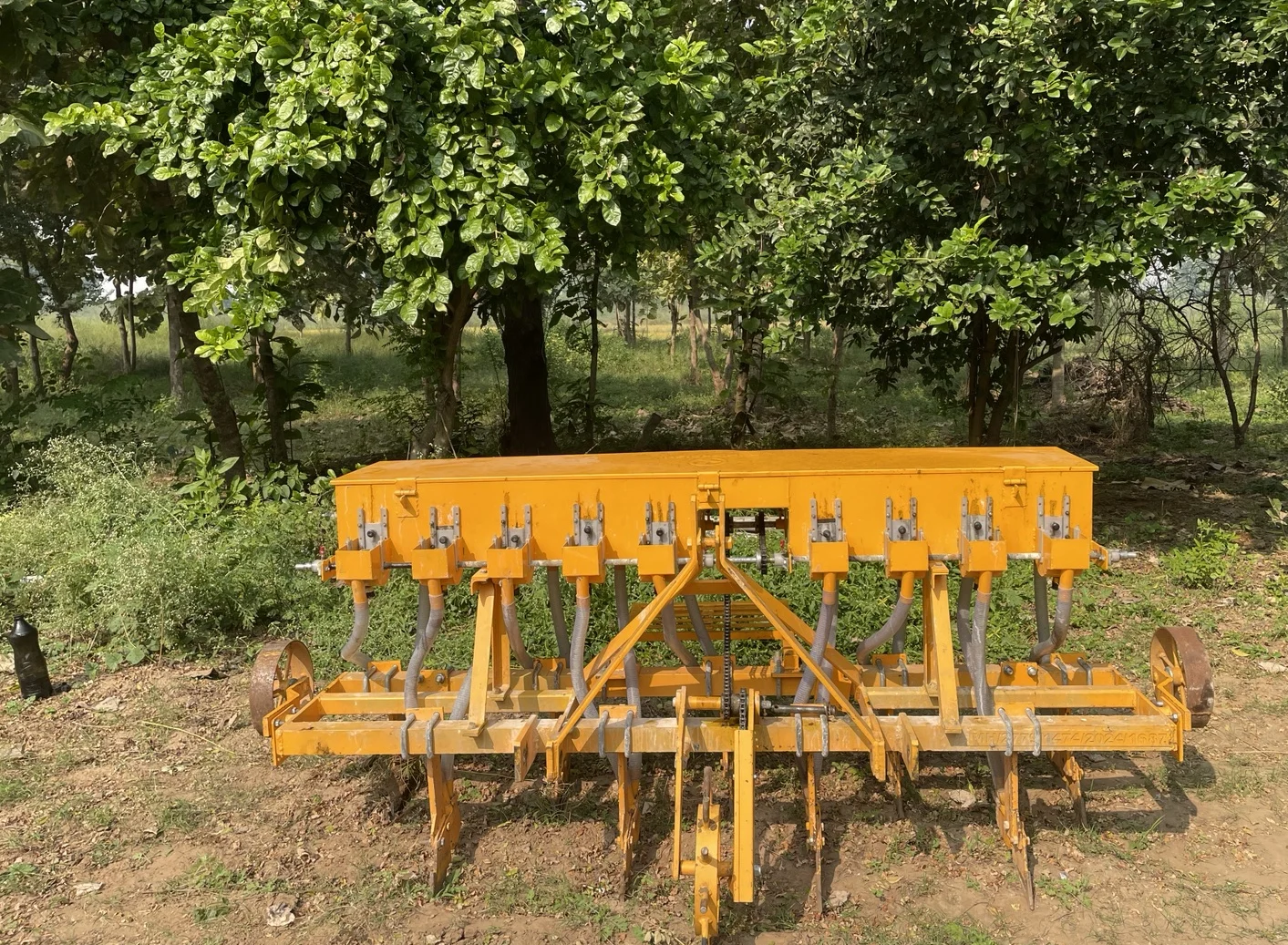
The tractor is only half the story
Levelling, rotavators, earthing-up and harvest work: understanding the tools through the job they do.
In this guide
Land levelling before planting, a rotavator between established rows, a thresher after cutting: the machine work in a farm season changes with the crop. The tractor supplies power, but the implement behind it explains much of what is happening.
Start with the job
A tractor supplies power and traction. The implement determines much of the work: cultivating soil, levelling, sowing, carrying or driving another machine. TNAU's machinery guidance emphasises matching attachments and power to the operation. Horsepower alone is not a description of a complete setup. [1]
Our banana archive records land levelling complete on 10 June 2026, followed by planting in July. It does not identify the tractor model, horsepower or every implement used. We can follow the operation without inventing the machine.
Names for different kinds of work
- A plough breaks and turns soil during primary preparation.
- A cultivator works the soil with tines; the setup and purpose determine where and how it is used.
- A levelling implement addresses high and low ground. In paddy preparation, levelling follows the earlier soil work.
- A seed drill places seed in the soil; a seed-cum-fertiliser drill also places fertiliser. Calibration belongs to the exact machine and crop.
- A thresher separates grain from harvested crop material. Cleaning and, for hulled grain such as Khapli, dehusking remain distinct stages. [1, 5, 6]
These are a guide to the vocabulary, not a claim that every implement was used on this farm.
What a rotavator does
A tractor-mounted rotavator uses rotating blades to work the soil. ICAR–CIAE's guide describes its soil-working role. It is a different operation from simply pulling a trolley or levelling a surface. [2]
In late September, our banana rotavator work resumed after the soil dried. Some sections remained and a repeat pass was planned. By 7 October, finishing the current work and beginning another pass were still on the task list.
The later confirmation of feeding and earthing-up does not establish that the second rotavator pass was completed. Keeping those tasks separate gives a more honest account of the work.
Between established plants
Working ground before planting and working around living plants are different settings. The route, available clearance and the crop already in place matter. So does whether the soil can carry the equipment without unnecessary damage. Saturated ground is not an invitation to keep working merely because a tractor is available. [1, 3]
The implement, working area, soil condition and passes describe the operation more clearly than tractor hours alone. Remaining patches show what still needs doing. Fuel consumption or cost per area needs measured quantities as well as time.
Earthing-up is another task
Earthing-up brings soil towards the base of the plant. It appears separately from rotavator work in our banana notes and was confirmed complete on 18 October. In the turmeric task list, weeding, feeding and earthing-up were planned in that order; the retrieved archive did not confirm completion. [4]
A tractor pass and hand work around a plant can therefore belong to the same row. Finishing one does not necessarily finish the other.
Harvest has several endings
Our chana and Khapli stories distinguish cutting, drying, threshing and cleaning. Khapli then required dehusking before the grain could be used as intended. A machine that grinds flour does not necessarily remove the hull.
That is why “harvest finished” can hide several unfinished jobs. Name the stage, record the quantity in its current form, and follow the crop until the next operation is genuinely done.
The better machinery question is not simply which tractor to use. It is what the field needs, what the implement can do, and whether the conditions are right for that work.
About this story
Machinery chronology comes from the June–October 2026 farm archive. Harvest and processing examples use the owner-supplied chana and Khapli stories. Tractor model, horsepower, fuel use and completion of the second rotavator pass are not established.
From the farm’s dated working notes.Sources & further reading
- TNAU · Farm machinery questions Accessed 2026-10-23
- ICAR–CIAE · Tractor-mounted rotavator Accessed 2026-10-23
- RHS · Waterlogging, drainage and avoiding work on saturated soil Accessed 2026-10-23
- TNAU · Banana aftercare and earthing-up Accessed 2026-10-23
- FAO · Paddy preparation, levelling and harvest Accessed 2026-10-23
- TNAU · Threshing and post-harvest stages Accessed 2026-10-23