Journal / FIELD READING
Khapli: the season beyond the harvest
Young green leaves, tall wheat heads, a staggered harvest—and the work of turning hulled wheat into food. Our Rabi 2025–26 season, in photographs and films.
Farm story · 3 min read Crop & CanopyA life in growing
Young leaves, tall heads, a hand-cut harvest and an extra processing step. A visual account of our Rabi 2025–26 Khapli season.
Triticum turgidum subsp. dicoccum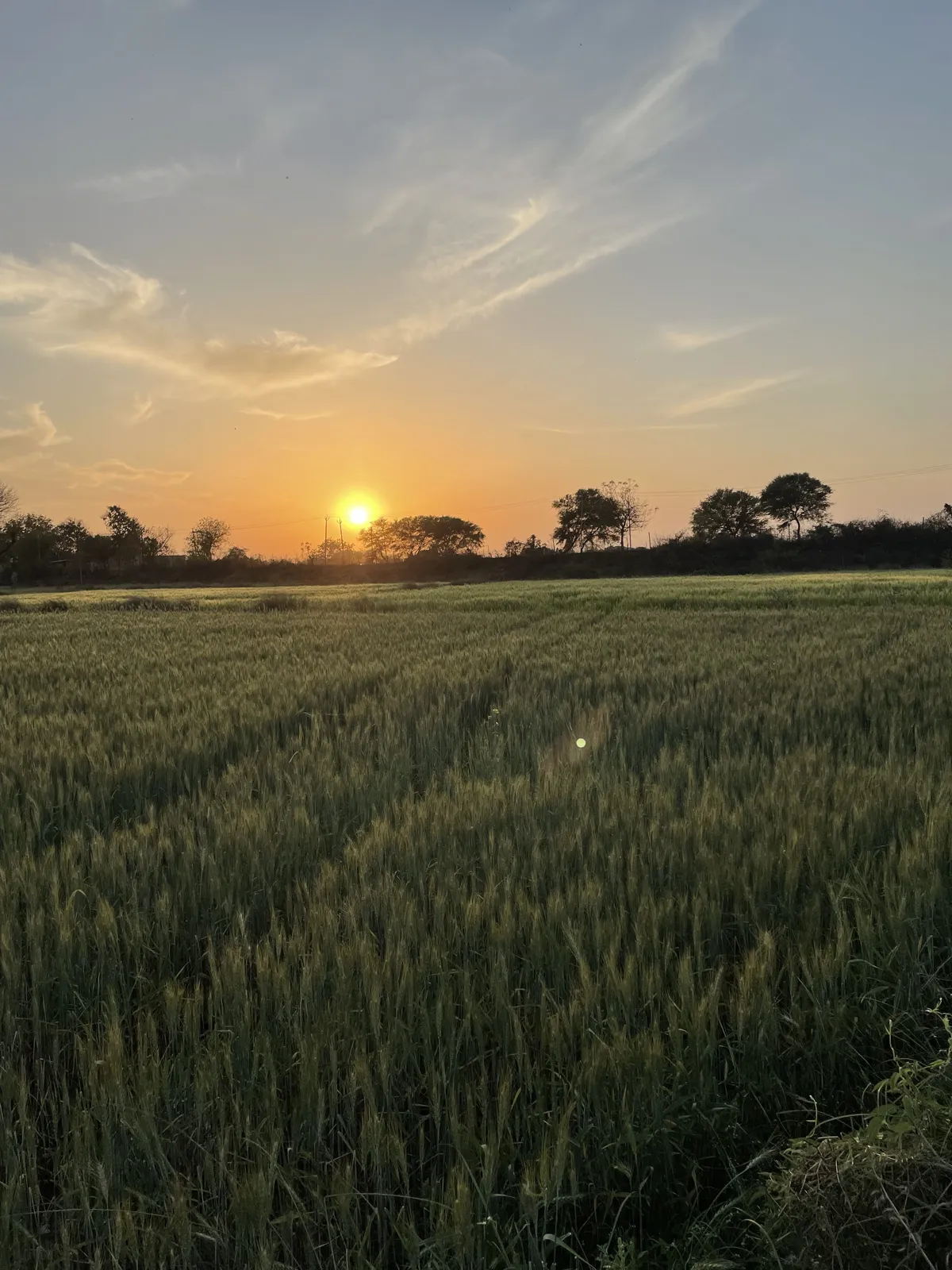
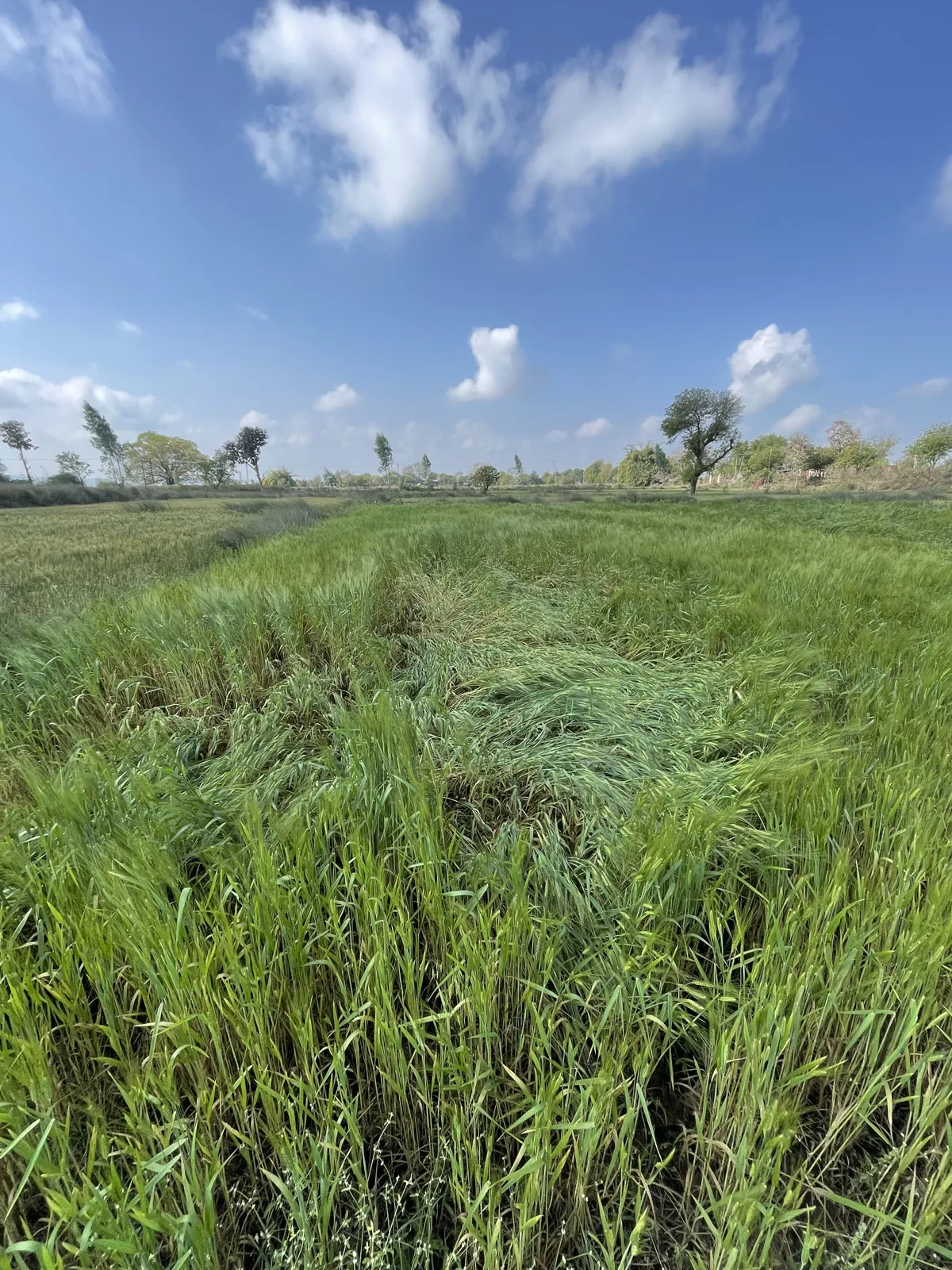
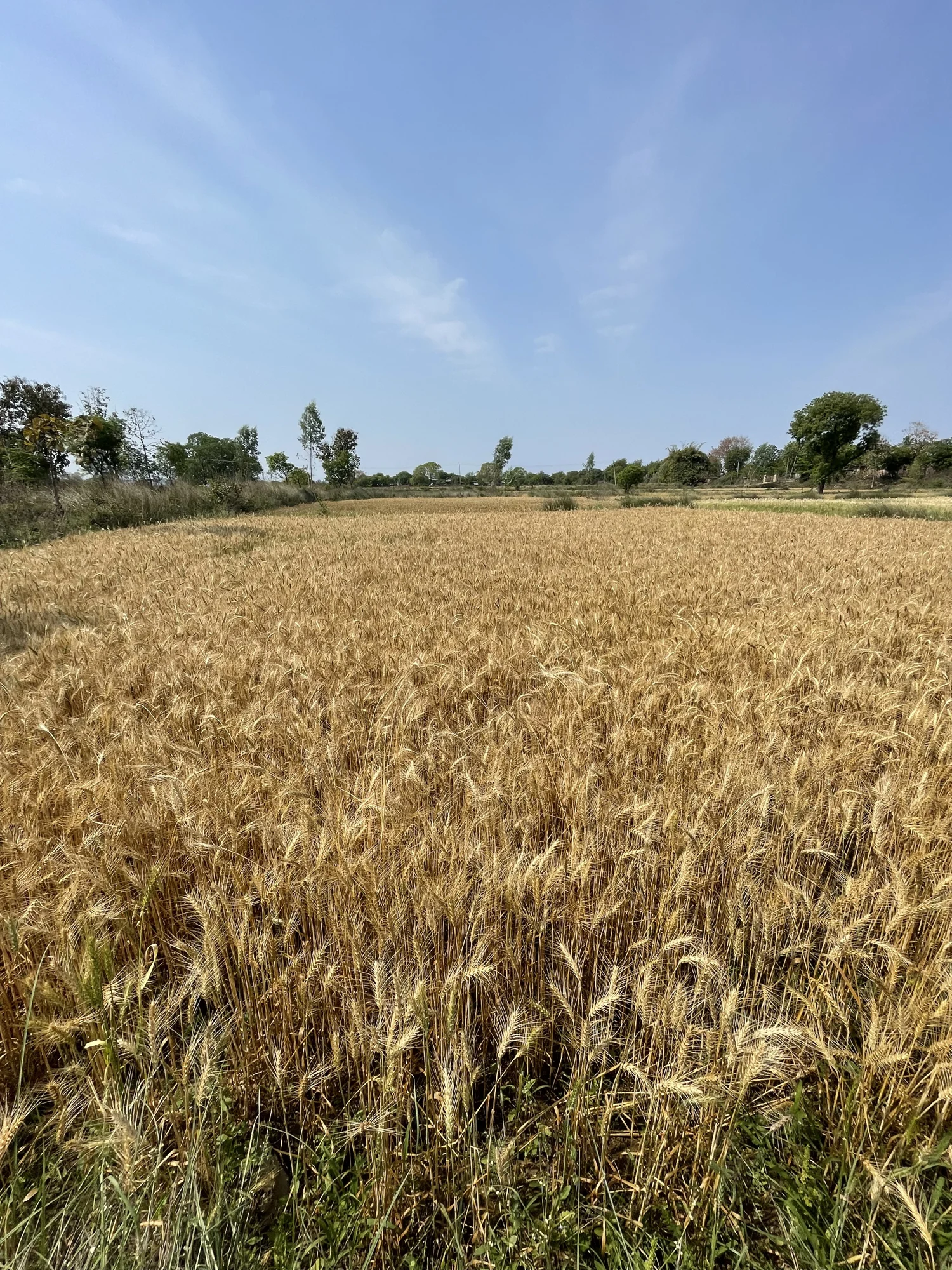
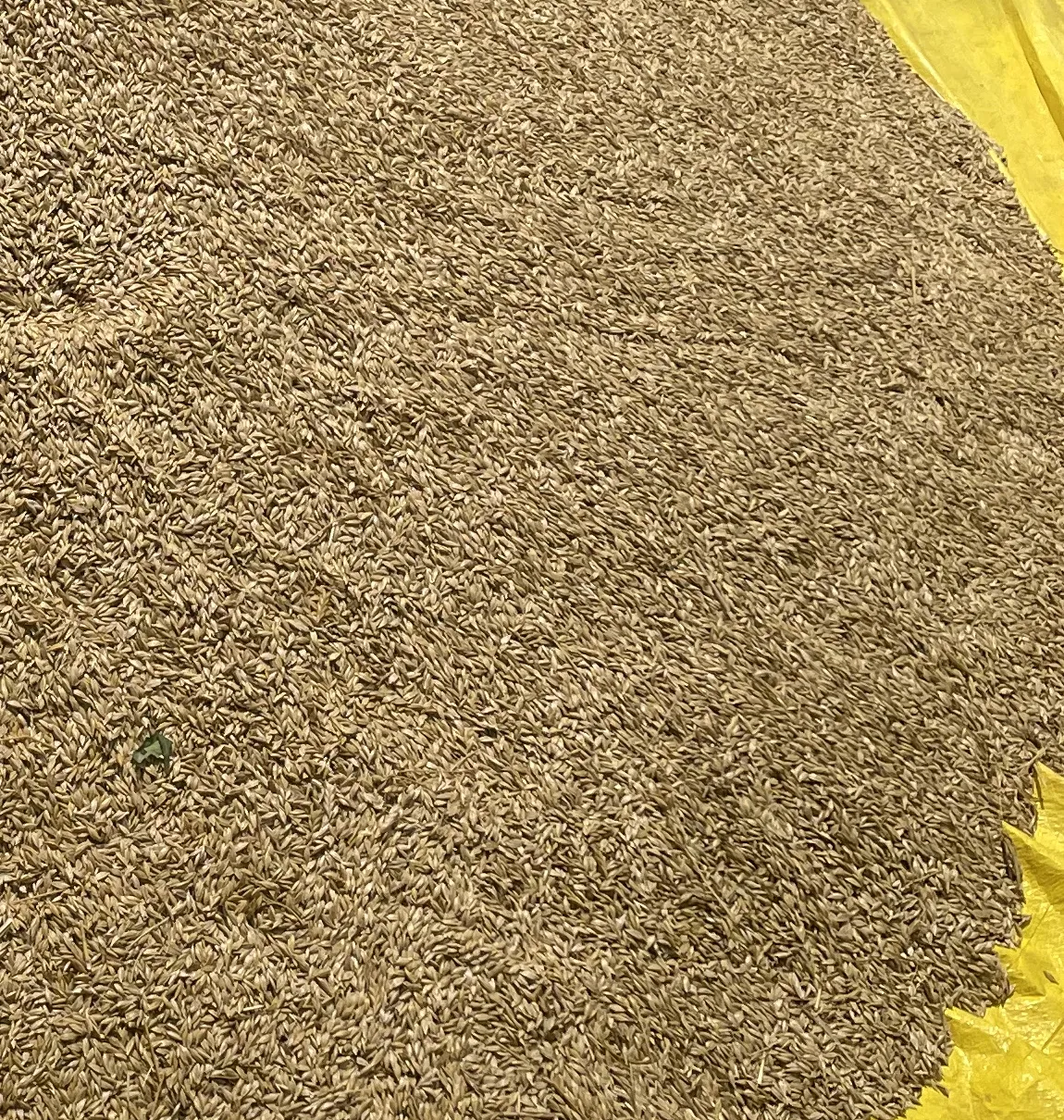
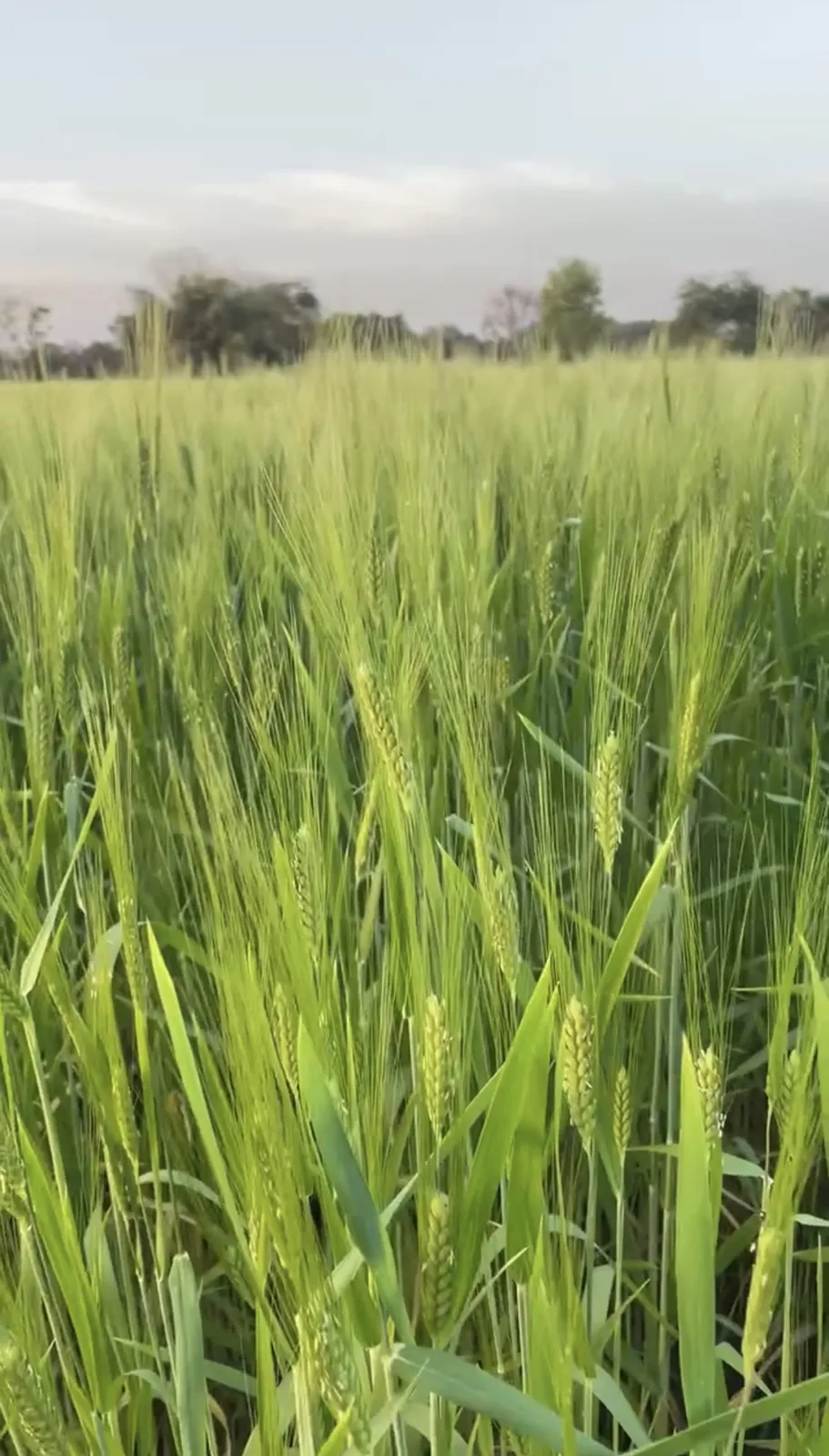
Khapli is emmer wheat, a hulled wheat whose grain remains enclosed after ordinary threshing. That one difference extends its story beyond the standing crop: cutting and drying are followed by threshing, then dehusking before the cleaned grain can be milled. Our Rabi 2025–26 season included tall heads, patches of fallen stems and a hand harvest taken in stages. Later, a separately measured processing batch showed how different a hulled harvest weight can be from the cleaned grain returned. The crop deserves both kinds of attention: the growing field and the work needed to make its grain usable.
Follow the stages. Their timing changes with the variety, weather and growing conditions.
Wheat begins with narrow seedling leaves and roots, then makes basal shoots called tillers. Some of these shoots will carry heads. The early stand’s density and access to light, water and nutrients shape the crop that follows.
Stem sections lengthen, lifting the developing head within the plant. Near heading, the upper leaf sheath swells around it—the boot stage. The head then emerges above the canopy, giving the field its familiar outline of wheat ears.
After flowering, the small kernels fill. Their contents pass from watery and milky to soft dough, hard dough and finally hard grain. Leaves remain important during this period because they supply much of the energy going into the kernels.
Cutting and drying prepare the crop for threshing, but emmer’s grain remains enclosed in its hull. Dehusking is a further operation before the cleaned wheat can be milled. Hull removal and flour milling therefore produce different kinds of weight loss.
A dense, heavily fed crop can be more vulnerable to lodging. Choose locally suitable sowing and nutrient plans that account for the variety, soil and previous inputs. More height and more leaf are not automatic signs of a better harvest.
Water availability matters as stems grow, heads develop and grain fills. Base irrigation on soil moisture and local crop advice, keeping drainage in view. A calendar alone cannot show whether the root zone is short of water or still wet.
Lodged patches can be harder to cut and may stay damp longer than standing heads. Inspect their maturity separately, and arrange a suitable drying space and dehusking route. Gentle handling and clean equipment help keep each lot useful through the extra processing step.
The owner’s account follows a hand-cut crop and a later dehusking trial. Lodging cause remained unresolved. The April harvest was weighed in hulled form; the June recovery belongs to one measured batch, not to the whole harvest.
About 10% of the crop was estimated to have lodged. Wind and unsettled weather were being watched, but no single cause was established.
Roughly 70% had been cut. Some grain felt hard, though there was uncertainty about cutting a portion early; cut stalks were left to dry further.
The harvest total was recorded as 510 kg of hulled Khapli. The grain still needed dehusking.
A 54 kg hulled batch returned 32.5 kg of cleaned grain, about 60.2%. The difference included hulls, removed material and any processing losses; it is not the recovery for all 510 kg.
These are dated entries from our farm. They describe this season’s work and results, rather than a schedule for another field.
Document the patch and inspect representative plants. Separate a possible trigger from a confirmed cause, and area lodged from measured grain loss.
Read the field guide Read the field caseCompare grain and moisture across the field, including standing and lodged patches. Keep cutting and threshing dates distinct.
Read the field guideRecord the form of every weight. A dehusking recovery needs a matched input and output from the same batch.
Read the field guideAfter dehusking, the cleaned wheat can be milled into flour or prepared in other grain forms. Dehusking removes the enclosing hull; it is a different operation from refining away bran. Khapli is wheat, and the name does not mean gluten-free. The farm’s June batch measured dehusking recovery, not a flour yield.
See the food journeyYoung green leaves, tall wheat heads, a staggered harvest—and the work of turning hulled wheat into food. Our Rabi 2025–26 season, in photographs and films.
Farm story · 3 min readHow to inspect lodging, record its extent and plan the next step without mistaking a flattened patch for a confirmed cause.
Growing guide · 3 min readMaturity, moisture and the work after cutting all matter when choosing a harvest window.
Growing guide · 3 min readDehulling, cleaning and flour milling are different stages—and their weights answer different questions.
Growing guide · 3 min readGeneral growing information draws on the references below. Farm dates and quantities come from the owner’s working notes, also explained in the linked farm stories.