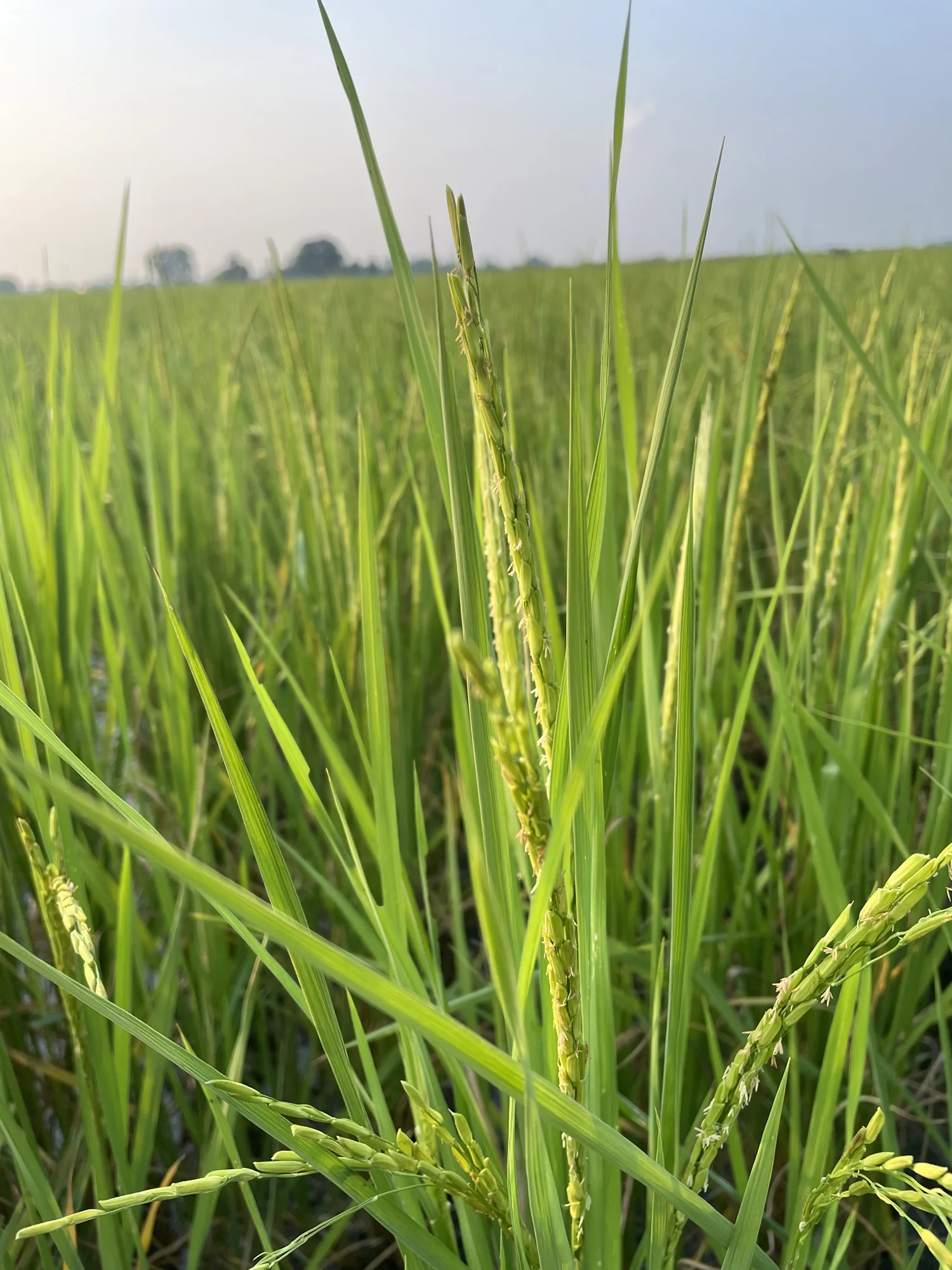
When a crop falls over
How to inspect lodging, record its extent and plan the next step without mistaking a flattened patch for a confirmed cause.
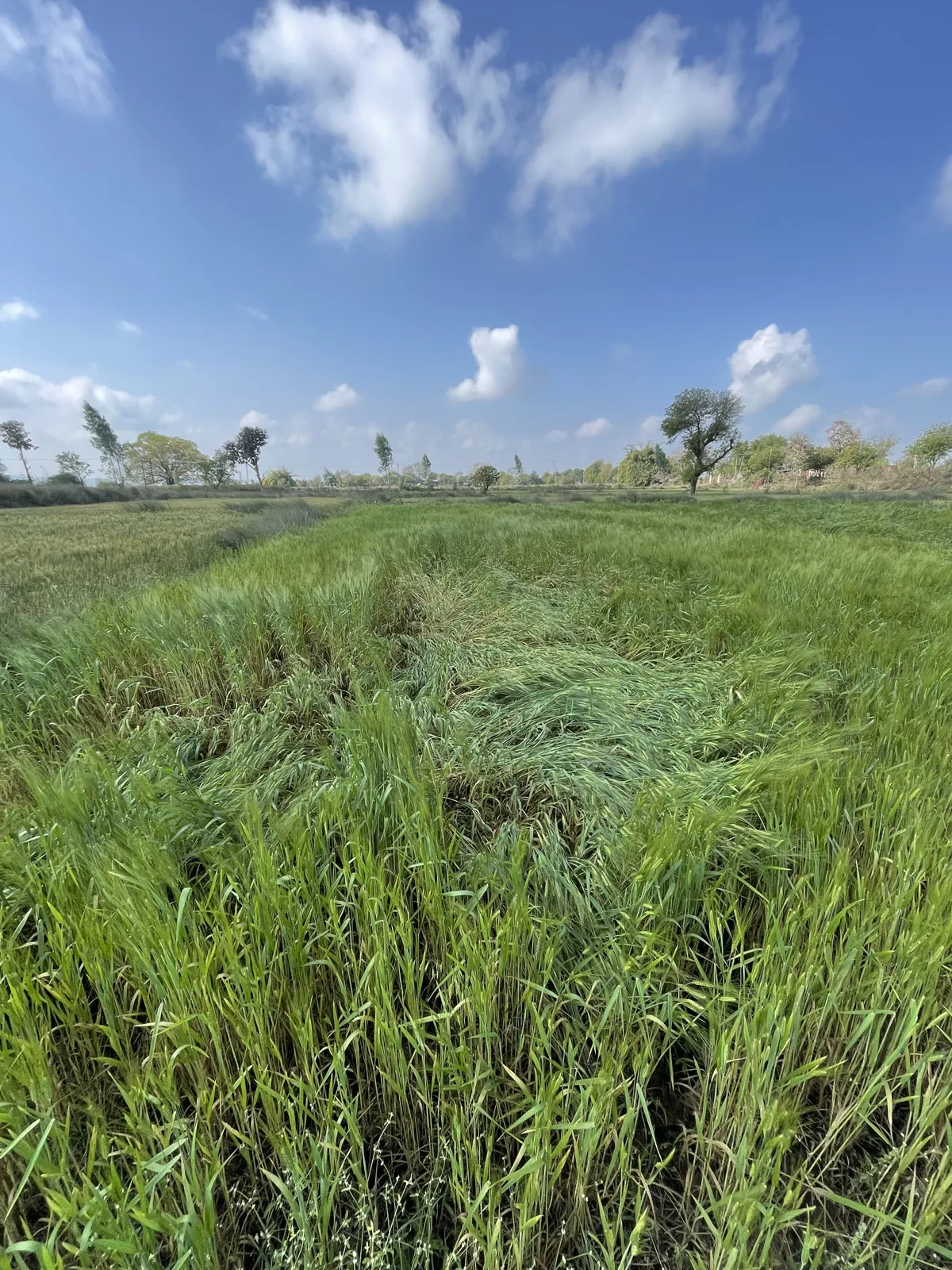
In this guide
By 20 March 2026, about 10% of our Khapli was estimated to have lodged: stems had bent or fallen among the wheat still standing. Wind and unsettled weather were being watched, but the owner's account did not settle on a single cause.
The fallen area was visible. Explaining it required a closer look at the plants and the ground beneath them.
Start at the base
Lodging describes a crop's loss of its upright position. It does not identify the point of failure. A stem may be bent or broken, or the plant may have tilted near the soil surface. Those differences are easiest to see at the base of representative plants, both within and at the edge of a fallen patch.
A wider photograph preserves the direction of the fall and the shape of the affected area. Close views can then show stems, roots or crowns and the condition of the soil. Pulling plants upright merely to tidy the view can obscure that evidence. If examination needs samples, an adviser can explain what to take and how to handle it.
Several factors can meet in one event
Weather can trigger a fall in a crop whose structure has already made it vulnerable. Cornell's small-grain guidance discusses dense stands, high fertility and excessive nitrogen in relation to weaker lower stems and greater lodging risk. [1]
Those are questions for the field history, not a verdict on a photograph. A fallen patch alone cannot establish that the crop was overfed. In our Khapli account, the watched weather and the estimated lodged area remain separate facts; the cause remains unresolved.
Timing matters as much as area
Wheat passes through tillering, stem growth, flowering and grain filling before maturity. Minnesota Extension's development guide helps place an event within that sequence. Heads and grain give the date its biological context. [2]
Ten per cent of an area lying over does not mean ten per cent of its yield has been lost. Plants can differ in the severity of the fall, the stage reached, the condition of their grain and how much harvest equipment can recover. A loss figure would need measurements from affected and standing areas.
Watch what changes afterwards
The fallen crop may dry differently. Michigan State's discussion of sooty mould notes that lodged wheat can retain moisture longer than standing grain. Darkened heads deserve examination, although colour alone cannot identify a disease or establish whether grain is suitable for use. [3]
Visits after changes in weather or maturity can reveal whether the grain's condition is deteriorating. Suspect material should remain identifiable while an appropriate laboratory or local adviser explains what testing is needed.
Before harvest changes the scene
The details most easily lost once cutting begins are:
- The patch boundaries and how the affected area was estimated.
- The direction of the fall and any upright comparison area.
- The point of stem failure, soil moisture and visible root or crown damage.
- Crop stage and grain condition when the patch was first seen.
- Harvest delays, method and separately measured recovery, where available.
Our Khapli was later hand-cut and given further drying before threshing. Those choices belong to that harvest, rather than a rescue recipe for every lodged crop. They are part of the longer question raised by the fallen stems: how will this particular crop reach maturity and be brought in?
About this story
The existing owner-authored Khapli Rabi 2025–26 story estimates about 10% lodging by 20 March and explicitly leaves the cause unresolved. No measured lodging-related yield loss is available.
From the farm’s dated working notes.Sources & further reading
- Cornell CALS · Small-grain fertility and lodging risk Accessed 2026-10-23
- University of Minnesota Extension · Spring wheat growth and development Accessed 2026-10-23
- Michigan State University · What’s that black mold on my wheat? Accessed 2026-10-23