Journal / FIELD READING
Chana: a harvest in its own time
Three varieties, uneven ripening and a harvest that unfolded over several weeks. A Rabi season in words and photographs.
Farm story · 3 min read Crop & CanopyA life in growing
Three varieties, uneven ripening and a harvest taken in stages. Follow our Rabi 2025–26 chana season through photographs, films and field notes.
Cicer arietinum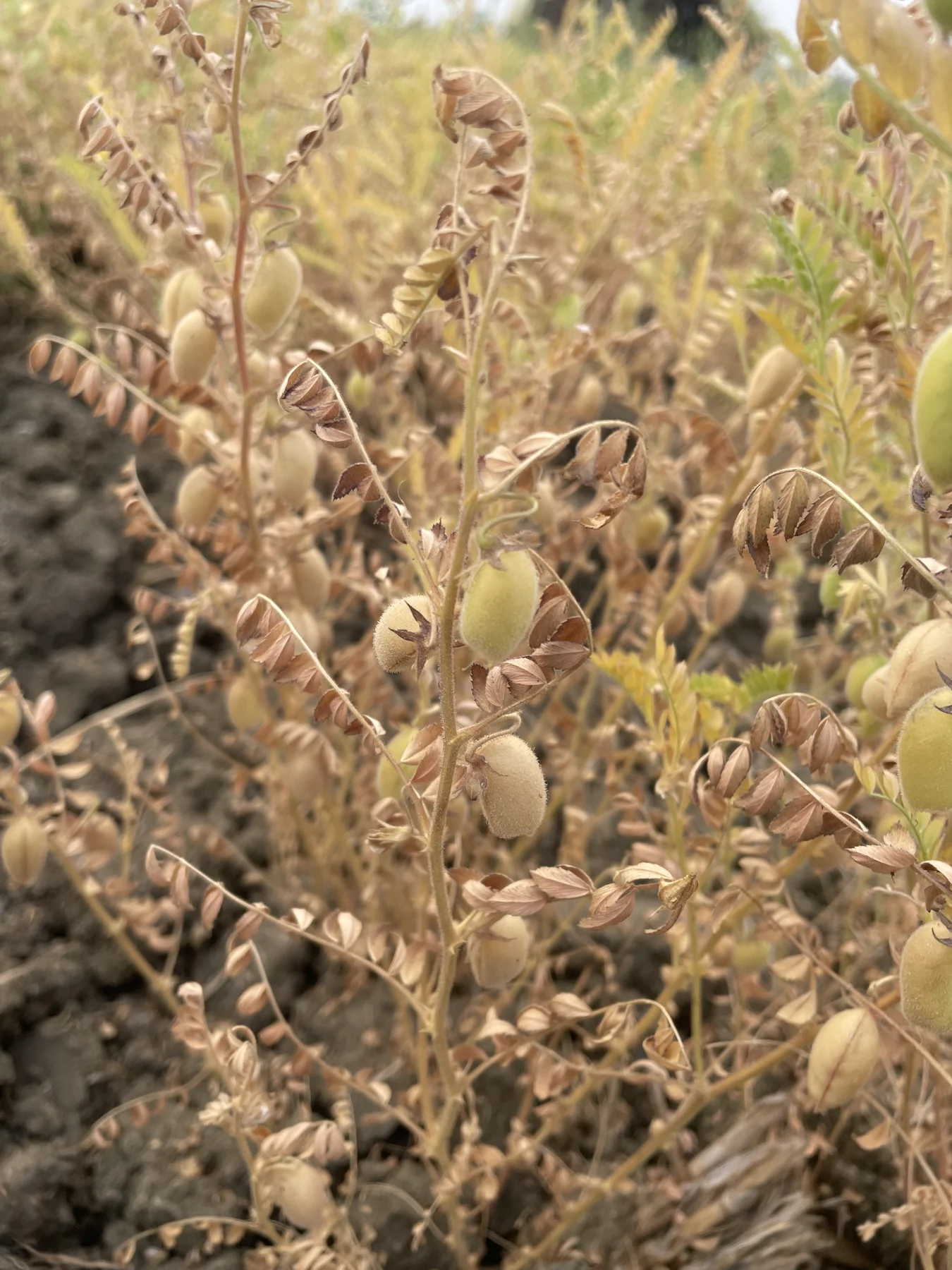
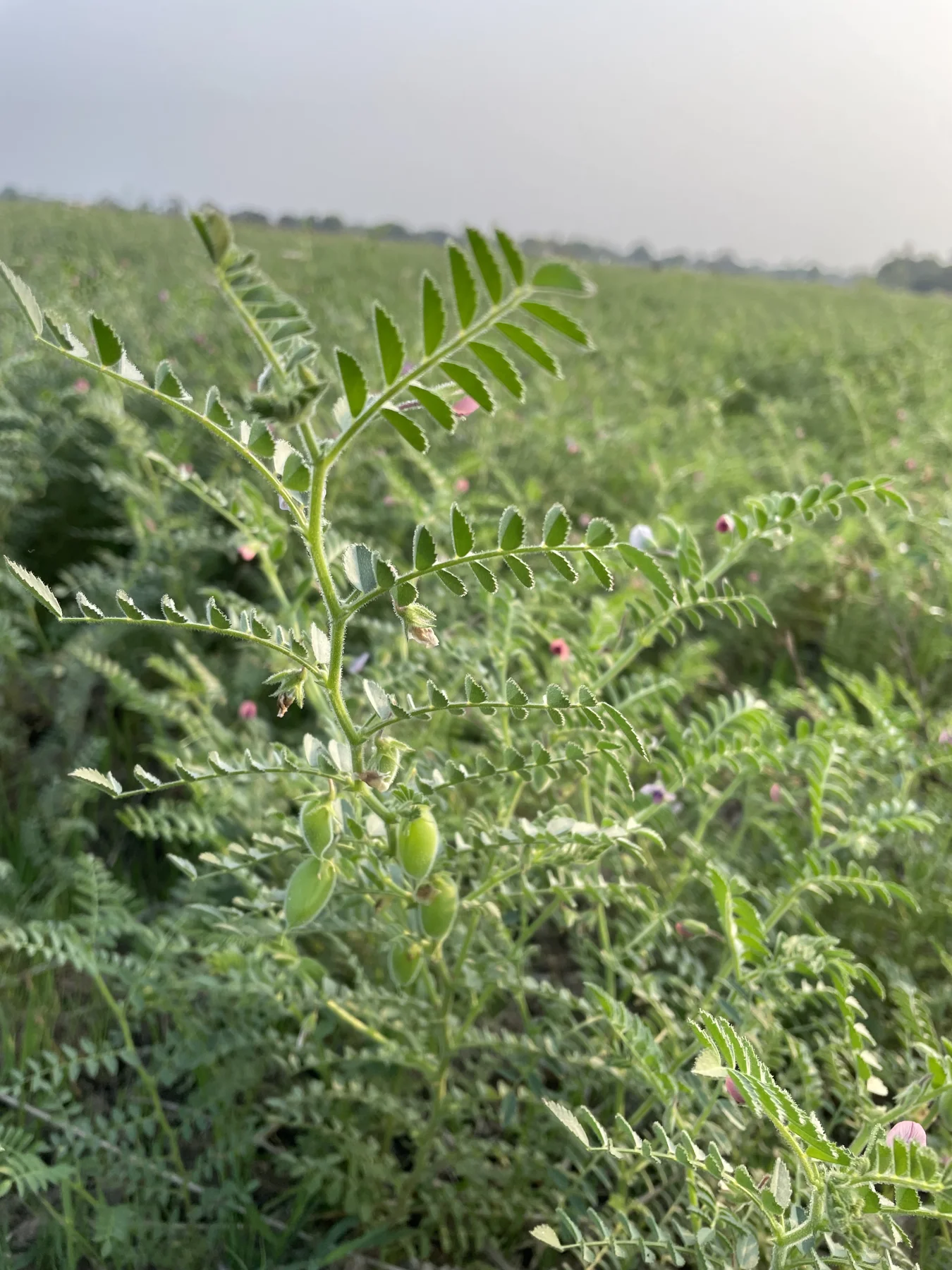
Chana brings the field down to a smaller scale: divided leaves, pale flowers and pods tucked among branching stems. The plant can keep making fresh growth after flowering begins, so flowers, filling pods and older pods may overlap. That makes a close walk more useful than judging the whole crop by colour from the boundary. In our Rabi 2025–26 season, three recorded varieties were kept separate through a harvest that unfolded over several weeks. The story connects the living crop with cutting, drying, threshing and cleaning—and leaves room for the patches whose behaviour we could not fully explain.
Follow the stages. Their timing changes with the variety, weather and growing conditions.
The seedling develops a taproot, lateral roots and a branching stem with small leaflets. Compatible soil bacteria can form nodules on its roots and help supply nitrogen. Good establishment gives the plant a foundation for its later flowers and pods.
Pale flowers appear along the branches while the plant can continue making leaves and shoots. Chana’s indeterminate growth means flowering and vegetative growth can overlap. Late favourable moisture may encourage another flush instead of the whole crop drying together.
Small pods form after flowering and their seeds expand. Open representative pods to see the difference between a developed outer pod and a filled seed. Plants and branches that flowered at different times may still be at different stages.
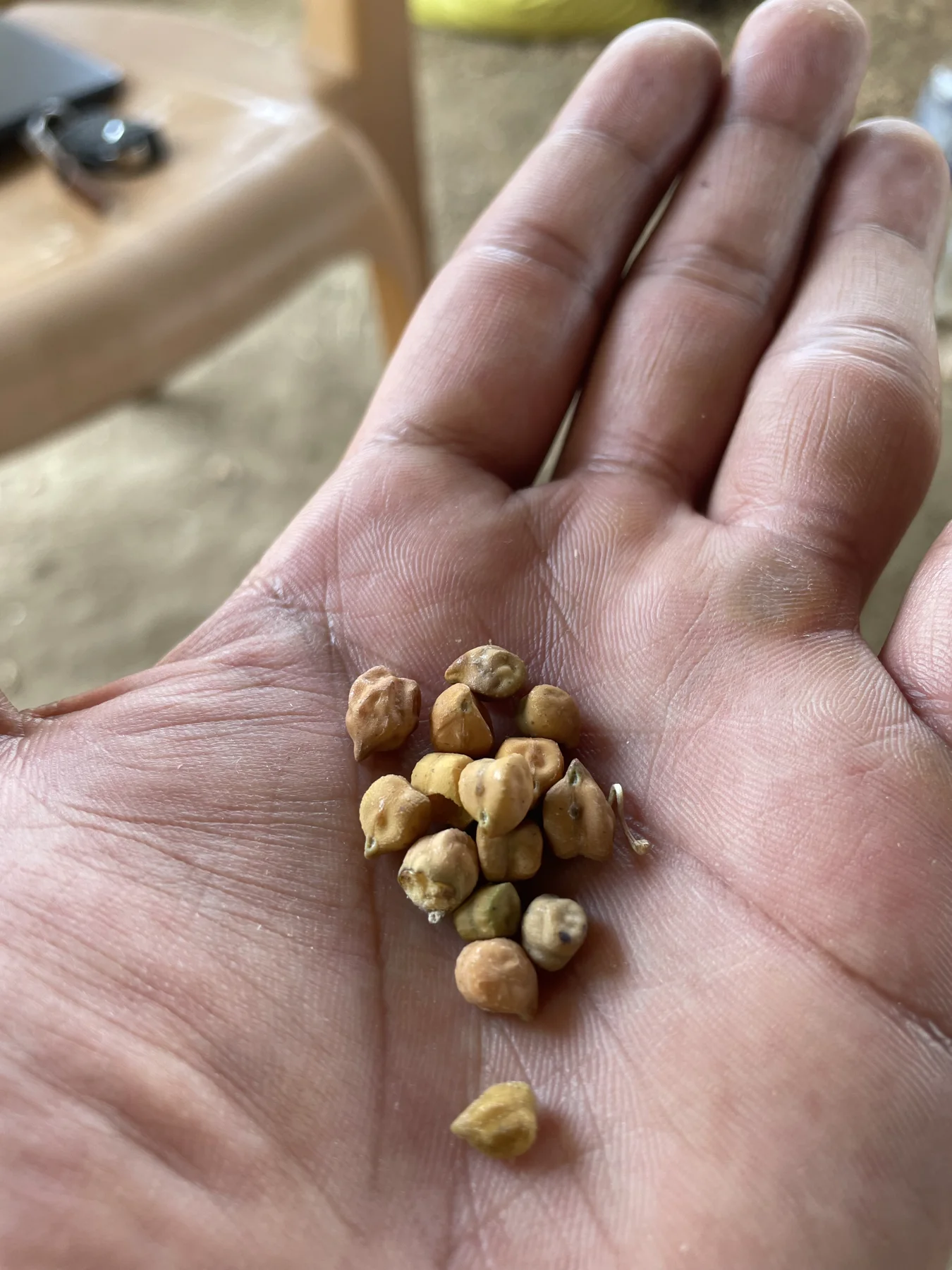
Pods and seed change towards their mature colour as the crop dries. Cutting may proceed in stages where maturity differs. Further drying allows threshing to release the grain, followed by cleaning before storage or processing.
Chana favours well-drained ground and tolerates waterlogging poorly. Plan irrigation around soil moisture and development rather than treating every green patch as thirsty. Fixing a leak can matter as much as providing a planned watering.
Chana’s relationship with compatible bacteria can supply part of its nitrogen need, but it does not remove the need for fertile soil. Where inoculation is advised, the product must suit chickpea. Soil testing helps identify other nutrient needs without assuming every pulse feeds itself.
Young chana leaves room for weeds between its branches. Timely removal reduces competition before flowering and pod filling. As harvest approaches, compare pod and seed development across the field so an unusually green patch does not dictate the treatment of everything around it.
Daftari, Pusa Manav and Pusa 362 were followed through staged cutting and threshing. A small patch resumed leafy growth after flowering with its cause unresolved; unintended irrigation affected other patches. The final weight is a cleaned-grain total, not a per-area yield.
Cutting started on mature chana in one field.
One field had been cut; the other was about 60% complete. Two plots remained green after unintended irrigation.
The first major threshing covered the first field and part of the second, after the cut plants had dried.
The final lot had been threshed by this date. Cleaning and winnowing followed.
The recorded cleaned-grain total was 1,950 kg across the three varieties. Planted area by variety is needed before comparing yields.
These are dated entries from our farm. They describe this season’s work and results, rather than a schedule for another field.
Compare pods and seeds, and trace the patch’s water and establishment history. Regrowth is possible, but the cause of the farm’s unusual flowering-then-leafy patch was not confirmed.
Read the field guideLabel lots through cutting, drying, threshing and cleaning. A finished threshing job does not establish that grain is ready for its intended storage conditions.
Read the field guideChana can be kept as whole grain or processed into split dal and flour. These are different forms of the same crop, with cleaning, dehusking and splitting among the possible steps. Our season’s 1,950 kg record refers to cleaned grain before any later dal or flour recovery is measured.
See the food journeyThree varieties, uneven ripening and a harvest that unfolded over several weeks. A Rabi season in words and photographs.
Farm story · 3 min readGreen patches beside mature plants need closer inspection. A guide to mapping differences and keeping harvest decisions and records clear.
Growing guide · 3 min readHarvesting, cleaning and deciding between whole chickpeas and dal are separate pieces of the work.
Growing guide · 2 min readChana can change a field’s sequence of work and biology, but its contribution needs local assessment.
Growing guide · 3 min readGeneral growing information draws on the references below. Farm dates and quantities come from the owner’s working notes, also explained in the linked farm stories.