Journal / FIELD READING
Chana: a harvest in its own time
Three varieties, uneven ripening and a harvest that unfolded over several weeks. A Rabi season in words and photographs.
Farm story · 3 min read Crop & CanopyA life in growing
A pod, a seed coat and the two halves inside explain how a chickpea becomes several familiar ingredients.
Meet the growing crop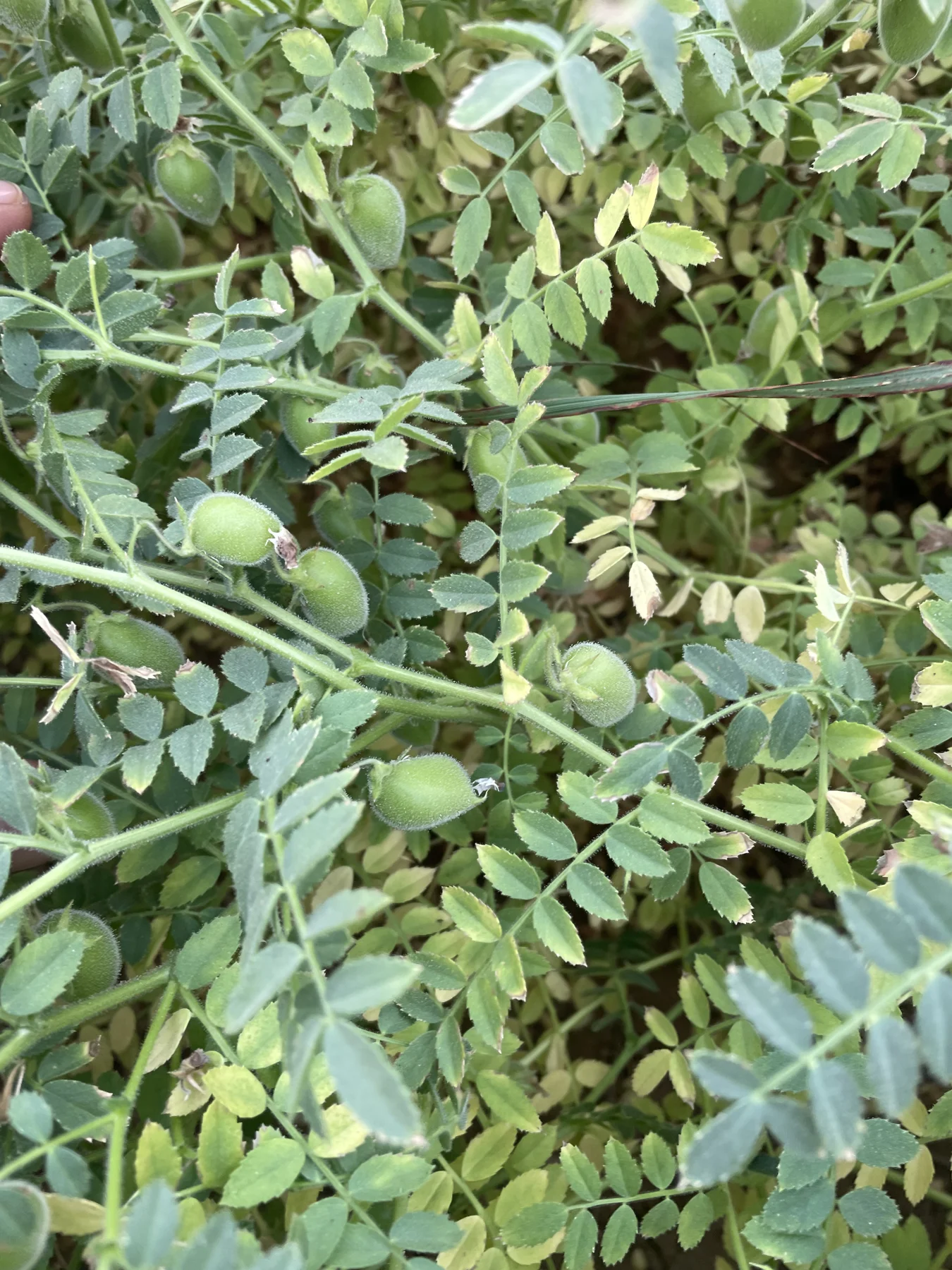
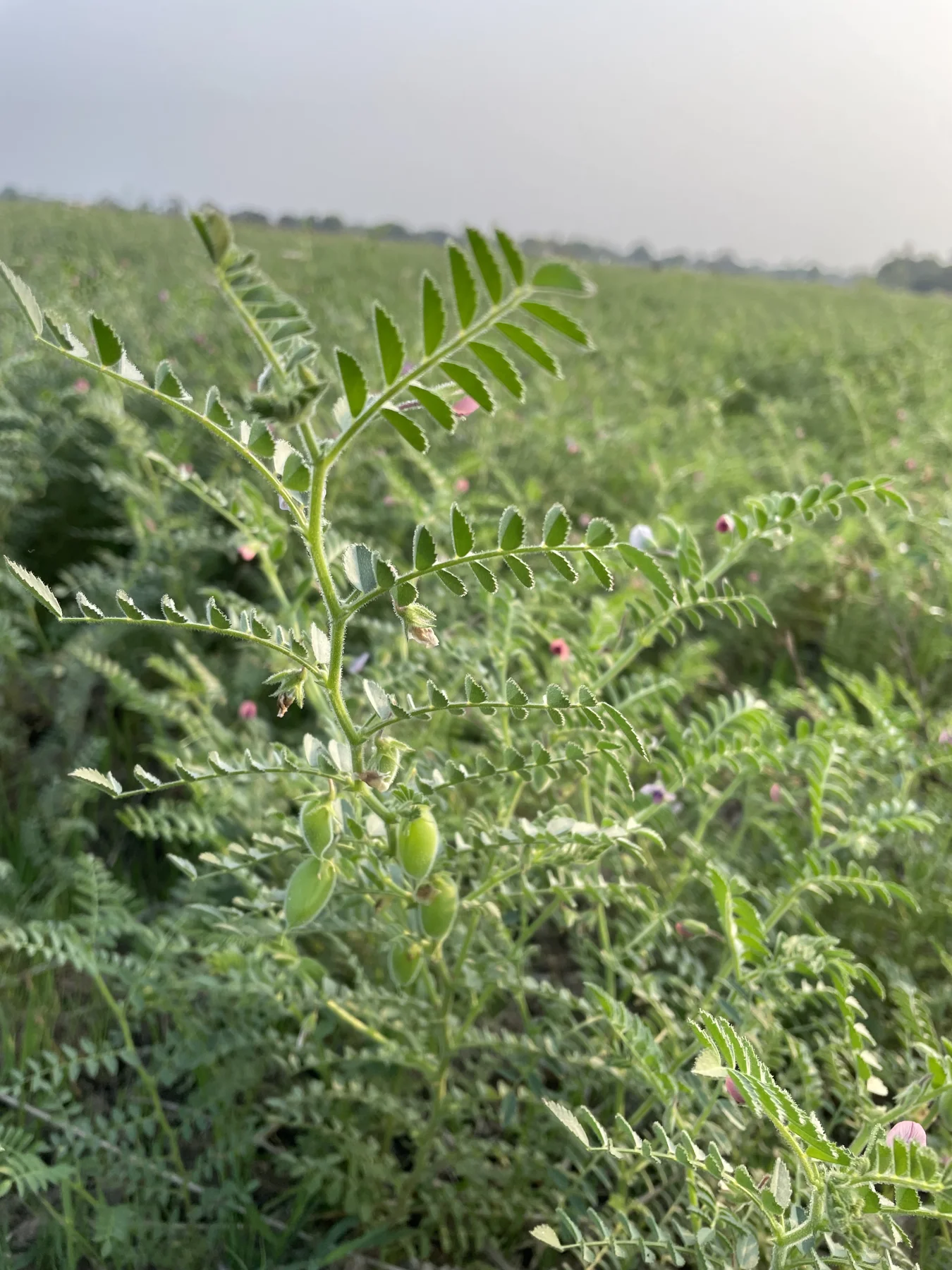
A chana pod is a small package on a branching plant. Inside it, the seed develops its own covering: the seed coat. Those are two different layers, removed at different moments. After harvest, clean dry seeds can remain whole, or lose their coats and separate into dal. Grinding the dehusked Bengal gram produces besan. The route is a series of physical changes, each giving the same crop a different form for the kitchen.
Choose a form to see its layers and the work behind it.
The pod grows on the plant and contains the developing chickpea seed. Its wall is the outer package. Within that package, each seed has its own seed coat. A pod can look developed while the seed is still filling.
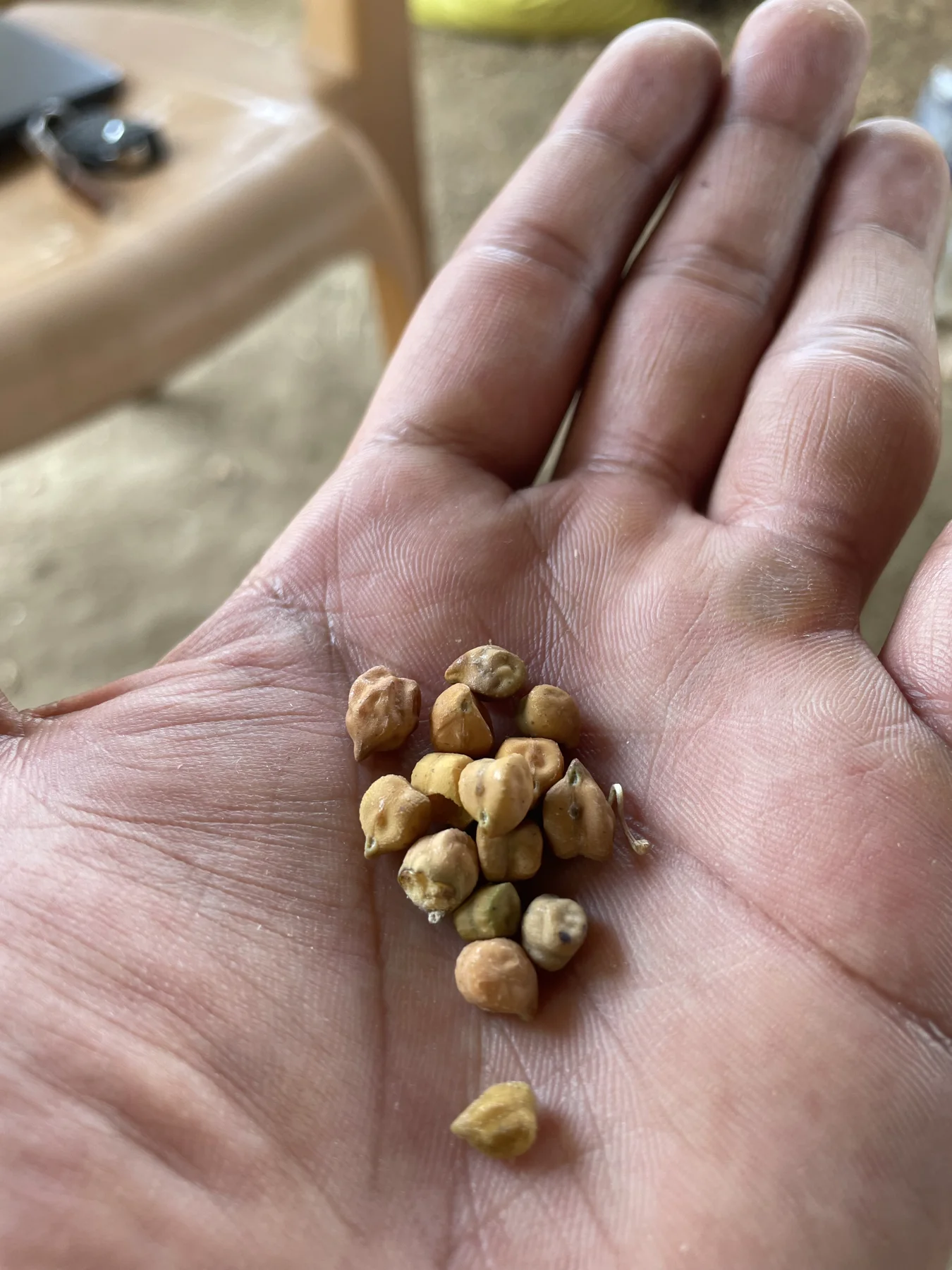
Threshing removes the seed from the pod. Once cleaned and suitably dried, the whole seed still carries its seed coat. That close-fitting coat is the layer removed during later dehusking for dal.
Chana dal is dehusked and split Bengal gram. The two pieces are the seed’s cotyledons. Splitting a pulse is different from a rice kernel breaking accidentally during milling: here, separation into halves is the intended product.
Grinding dehusked Bengal gram makes besan. Chana dal is a common starting material. The flour is therefore another step along this route, rather than a powder made from the discarded pod or a new crop.
The sequence depends on the crop and how it will be handled. These are general processing stages.
Chana flowers develop into pods containing the seeds. The plant can continue making new growth after flowering begins, so flowers, filling pods and older pods may be present together. A developed pod does not always mean the seed inside has finished filling.
The developing seeds gain substance before the crop dries down towards harvest. Uneven maturity can leave one part of a crop ready while another is still growing. Harvest assessment needs a look inside representative pods as well as at their colour.
After cutting and suitable drying, threshing separates the seeds from pods and plant material. Cleaning removes pieces of pod, stalk, dust and other unwanted material. The chickpea’s close-fitting seed coat is still present; it is not the discarded pod wall.
Whole dry chana keeps the seed coat around the inner seed. This is one possible ingredient at the end of cleaning and drying. It does not need to become dal or flour: those are further routes from the harvested pulse.
Pulse milling removes the seed coat and separates the seed into its two halves, the cotyledons. Cleaning, dehusking, splitting and separation may require several passes. The split material is chana dal, a different form from a whole chickpea.
Besan is flour made by grinding dehusked Bengal gram, commonly from chana dal. Grinding reduces the pieces to flour; the pod and seed coat have already been removed. The fineness can be selected for the intended ingredient or product.
The farm’s cleaned chana quantity reached 1,950 kg after a season of uneven maturity and staggered work. This is the whole cleaned crop at the recorded stage; no quantity of dal or besan is established by that figure.
This is a cleaned-seed weight, before any further milling into dal or flour.
No. Threshing separates the seed from the pod. The later dehusking step in pulse milling removes the seed coat attached to that seed. Looking for those two coverings makes the sequence easier to follow.
They come from the same crop, but have different physical forms: coated whole seed, dehusked halves and flour. Choose the form named in the preparation you intend to make; processing has already changed what is in the bag.
Ask what was ground. The besan definition used here is flour from dehusked Bengal gram, often chana dal. A flour made by grinding whole chickpeas with their coats follows a different route, so “chickpea flour” alone can leave the processing unclear.
Three varieties, uneven ripening and a harvest that unfolded over several weeks. A Rabi season in words and photographs.
Farm story · 3 min readHarvesting, cleaning and deciding between whole chickpeas and dal are separate pieces of the work.
Growing guide · 2 min readGreen patches beside mature plants need closer inspection. A guide to mapping differences and keeping harvest decisions and records clear.
Growing guide · 3 min readIllustrations explain the processing stages in general. Photographs come from our farm archive; they do not represent each illustrated food form or the weighed batch.