Water has its own timetable
Pumps, rain, drainage and crop stages: why irrigation begins with reading the field.
In this guide
In July, the farm needed irrigation because the monsoon had not supplied enough water. In August, low patches needed water pumped out. By late September, rain had made a planned banana irrigation unnecessary.
The pump’s next job depended on where the water already was.
Supply is only the beginning
On 27 July 2026, the farm archive records irrigation equipment being shared between banana and paddy. That small detail carries a larger practical question: which crop needs water now, and can the supply reach it in time?
Hours on a pump describe time, rather than the water delivered. Volume needs a measured flow; the crop, stage, area reached and ground condition help explain how that delivery was used. Recent rain and the parts still waiting for water complete the picture.
The route through the field
Water control includes the inlet, channels, field levels, bunds and an outlet. Uneven ground can leave one part wet while another waits. IRRI's water-management guidance explains how levelling and separate channels help farmers control delivery and drainage. [1]
On 8 August, our archive records pumping from a waterlogged paddy patch and reusing that water elsewhere for irrigation and transplant preparation. The work was both drainage and supply. The record does not include a measured volume or water-saving result.
Rice needs its own reading
Water management changes with establishment and growth stage. Direct-sown rice and transplanted rice do not begin in the same condition. Heading and flowering are particularly sensitive periods for water shortage. [1, 2]
Alternate wetting and drying is a managed rice-irrigation method, using observations of the field water level and protection of sensitive stages. It is not simply leaving the crop without water for a chosen number of days. The farm notes retrieved here do not establish that this method was used. [1]
A banana field asks a different question
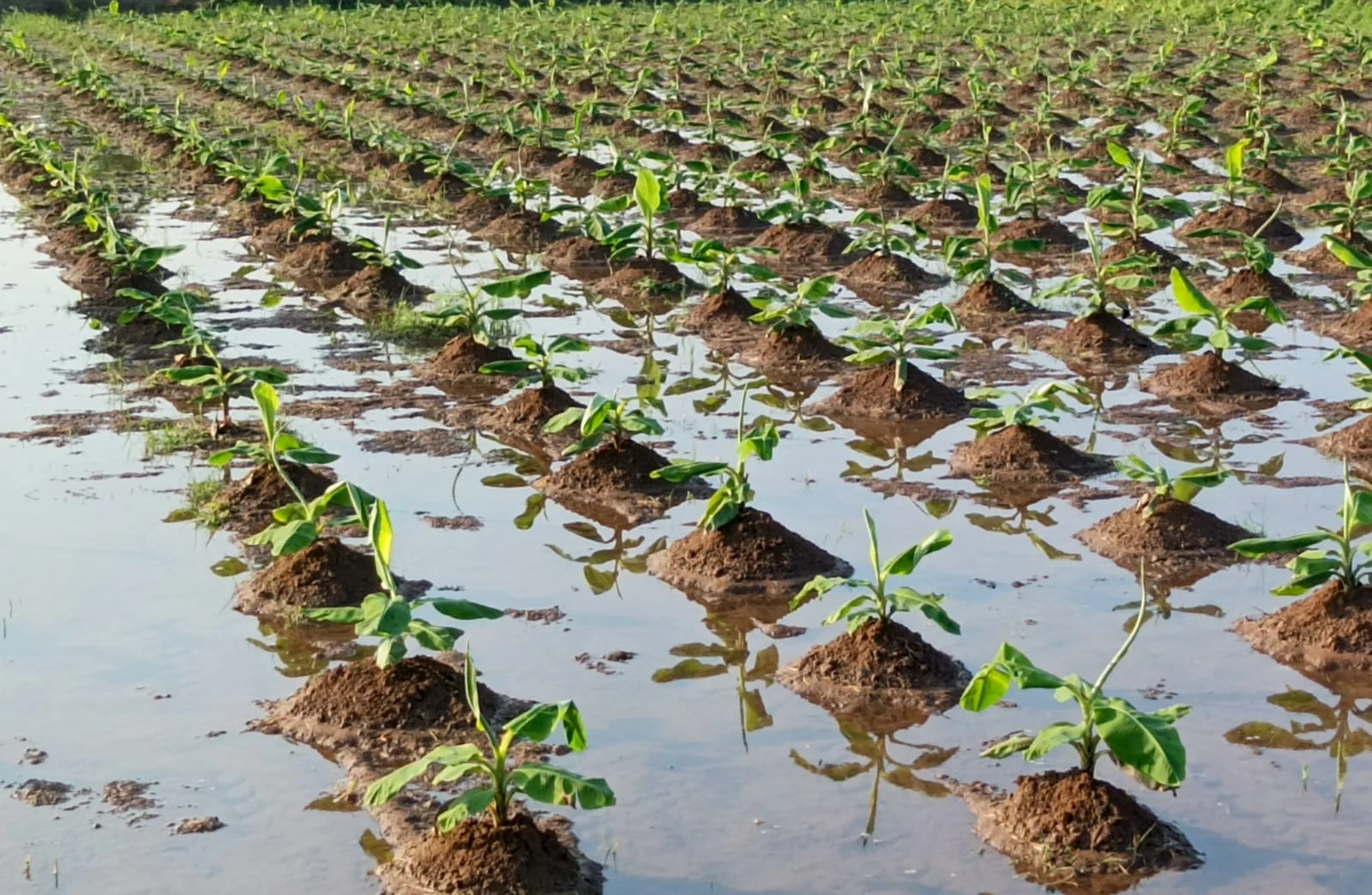
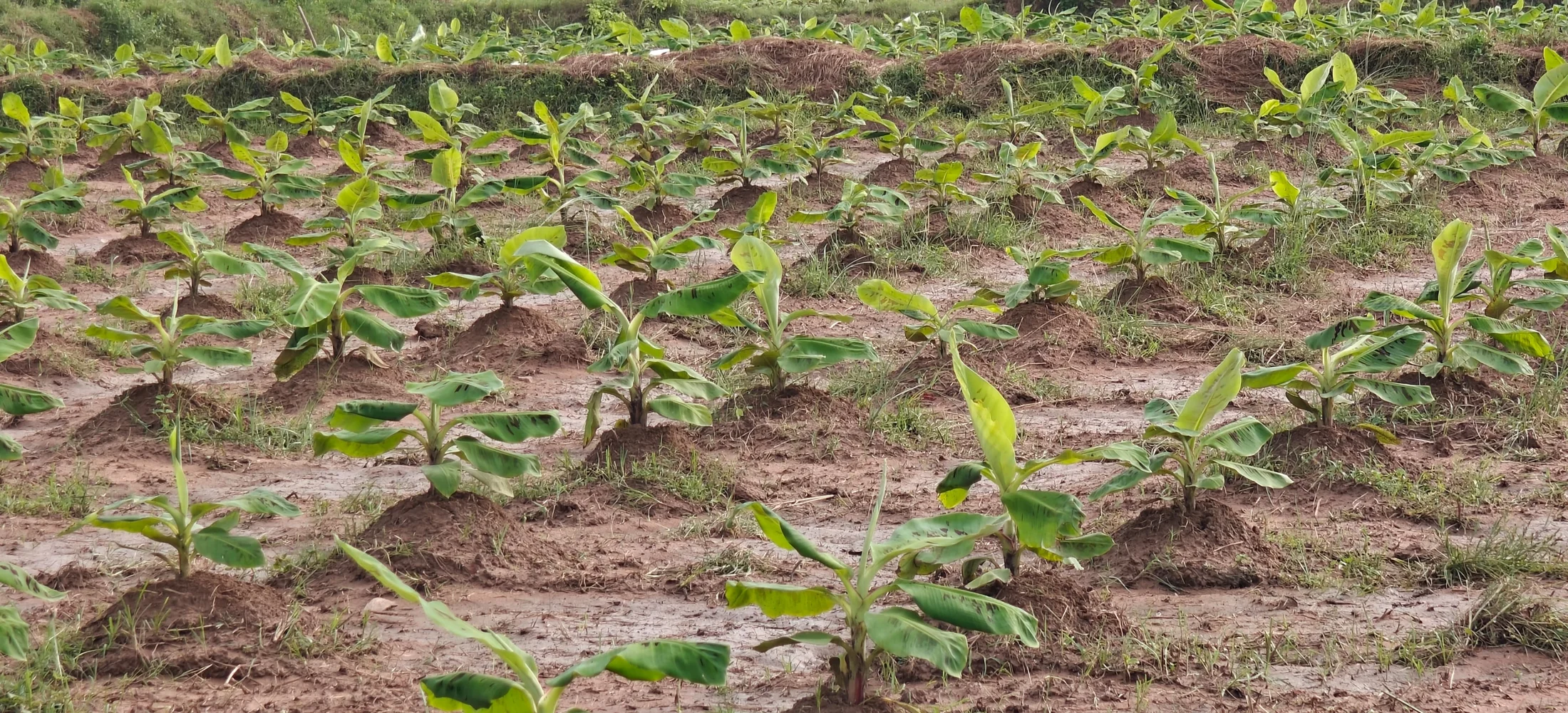
The September banana sequence ran from wet ground delaying soil feeding, to completed feeding, to rainfall replacing a planned irrigation. On 18 October, irrigation was again ongoing after the second feeding and earthing-up.
Those entries are more useful together than a fixed watering interval would be. They show why the next visit needs to consider moisture already in the ground, the weather and the crop's condition.
The chana story offers another view: unintended water exposure was associated with uneven maturity in part of the crop. More water is not automatically more timely water.
Before starting the pump
- Check the crop's growth stage and the moisture already present.
- Look at recent rain and the near-term forecast.
- Check whether water can reach the intended area and leave where needed.
- Record how much of the task was completed, rather than assuming the whole farm was covered.
- Return afterwards to look for dry stretches, leaks and water that remains trapped.
Irrigation is a decision about where water belongs now. Drainage is part of the same understanding.
About this story
Farm examples come from 27 July, 8 August, 7–24 September and 18 October 2026. The chana example comes from the owner-supplied Rabi story. No flow measurement, irrigation volume or AWD adoption is established.
From the farm’s dated working notes.Sources & further reading
- IRRI Rice Knowledge Bank, Odisha · Water management Accessed 2026-10-23
- FAO · Paddy preparation, water and growth stages Accessed 2026-10-23